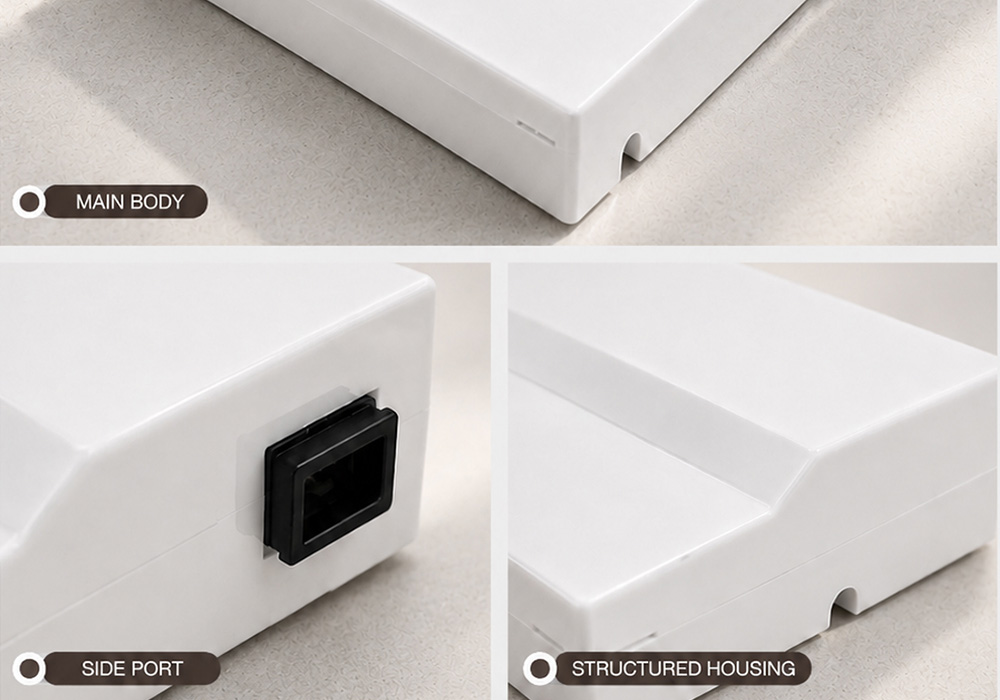
In the fields of low-voltage systems, intelligent security, structured cabling, and smart homes, **information faceplates** serve as fundamental yet critical structural plastic components. When selecting or customizing these faceplates, procurement professionals often encounter a range of thorny issues: samples may appear acceptable, but mass-produced units suffer from misaligned apertures or fragile snap-fits that break easily. Suppliers may outsource mold production, leading to week-long (or longer) turnaround times for mold modifications—ultimately causing project delays. Inconsistencies in color across different batches, along with surface defects like sink marks or weld lines, can result in rejection by end clients. Furthermore, relying on a contract manufacturer that lacks in-house mold maintenance capabilities—forcing the involvement of a third party—creates a convoluted communication chain and ambiguous accountability. At their core, many of these pain points are not merely issues with the injection molding process itself, but rather downstream consequences of inadequate upstream mold-making capabilities.
The intended application of information faceplates dictates their core technical requirements. First, there are assembly tolerances: these faceplates must integrate precisely with back boxes, modules, and dust covers. Tolerances for screw holes, mounting slots, and snap-fits typically need to be kept within a range of ±0.05 to ±0.1 mm; exceeding these limits can lead to assembly failures, loose fits, or warped edges. Second, there are stringent aesthetic requirements. As exposed components, most orders demand surfaces free from visible sink marks, air bubbles, or flash, with consistent matte or glossy finishes. Certain industrial-grade orders may also require flame retardancy, UV resistance, low-temperature tolerance, and aging resistance—ensuring the components do not yellow or become brittle over long-term use on walls. Additionally, many projects necessitate custom apertures, specific areas for screen printing, or non-standard, complex shapes—all of which demand rapid mold modification and iterative trial-molding capabilities.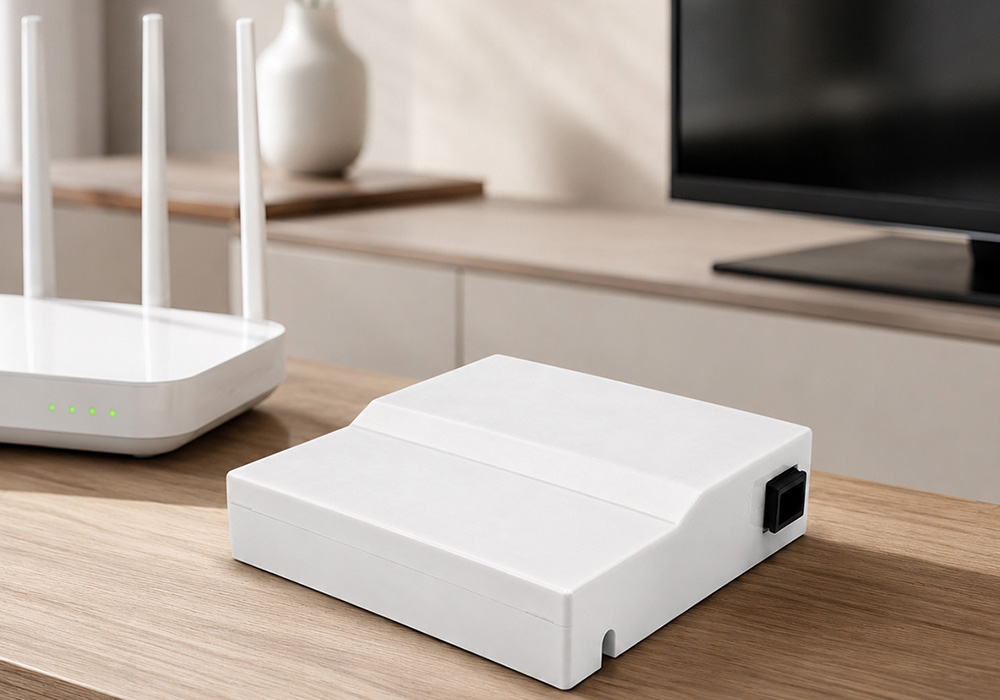
Many injection molding facilities on the market lack an in-house mold-making workshop, opting instead to outsource all mold production to small, independent machine shops. The primary drawbacks of the conventional outsourcing model are as follows: First, processes such as mold creation, modification, repair, and polishing require coordination across different facilities. Issues like misaligned holes or improper draft angles necessitate the repeated shipping of molds back and forth, which significantly extends the trial-production cycle. Second, a lack of ongoing maintenance leads to mold wear; after several thousand production cycles, cavity degradation causes panel dimensions to drift, resulting in inconsistent product quality. Third, when problems arise, the injection molder and the mold maker often shift blame onto each other, leaving the procurement team caught in the middle and unable to resolve issues efficiently.
Unlike a standard injection molding contract manufacturer, Hubei Baiteng Plastic Electronics Technology Co., Ltd. maintains an in-house mold production and maintenance department. Equipped with a comprehensive suite of precision machinery—including CNC machining centers, precision electrical discharge machines (EDM), slow-wire EDM, precision surface grinders, milling machines, and lathes—we manage the entire lifecycle internally: from mold design and cavity machining to polishing, trial production, and routine mold maintenance and repair. For precision, thin-walled plastic components like information panels, we implement key controls as early as the mold-making stage: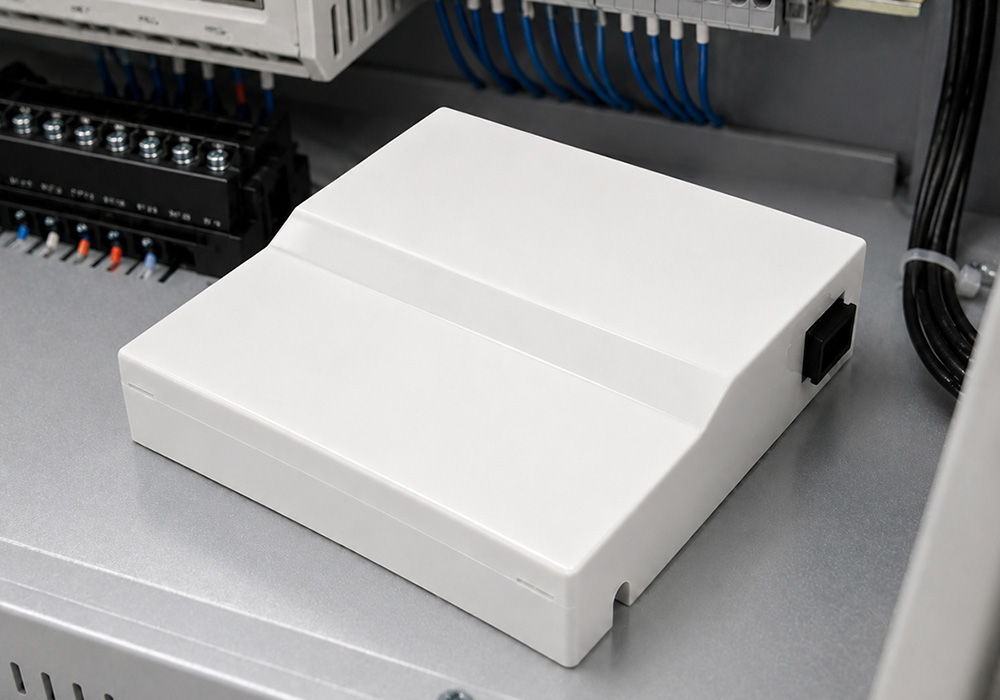
1. We use wire EDM for snaps, narrow grooves, and small holes to ensure precise dimensions for sharp corners and tight slots, preventing damage or breakage to snaps during demolding.
2. Precision grinding ensures the flatness of parting lines and inserts, minimizing flash and reducing the need for manual post-processing (trimming).
3. During the trial-production phase, we rapidly adjust gate locations and cooling channels to mitigate common defects in information panels, such as sink marks and warpage.
4. Throughout mass production, we employ a scheduled mold maintenance protocol—monitoring cavity wear and checking for clogged venting channels—to ensure consistent dimensions and appearance across tens of thousands of production cycles.
Beyond mold making and injection molding, we also provide comprehensive downstream services, including panel trimming, assembly, installation of dust-proof components, and individual packaging. We offer an integrated, end-to-end solution covering mold creation, injection molding, post-processing, assembly, and packaging. For procurement teams, this means dealing with a single supplier rather than coordinating separately with mold makers, injection molders, and packaging providers—thereby reducing coordination costs and ensuring better control over project timelines.