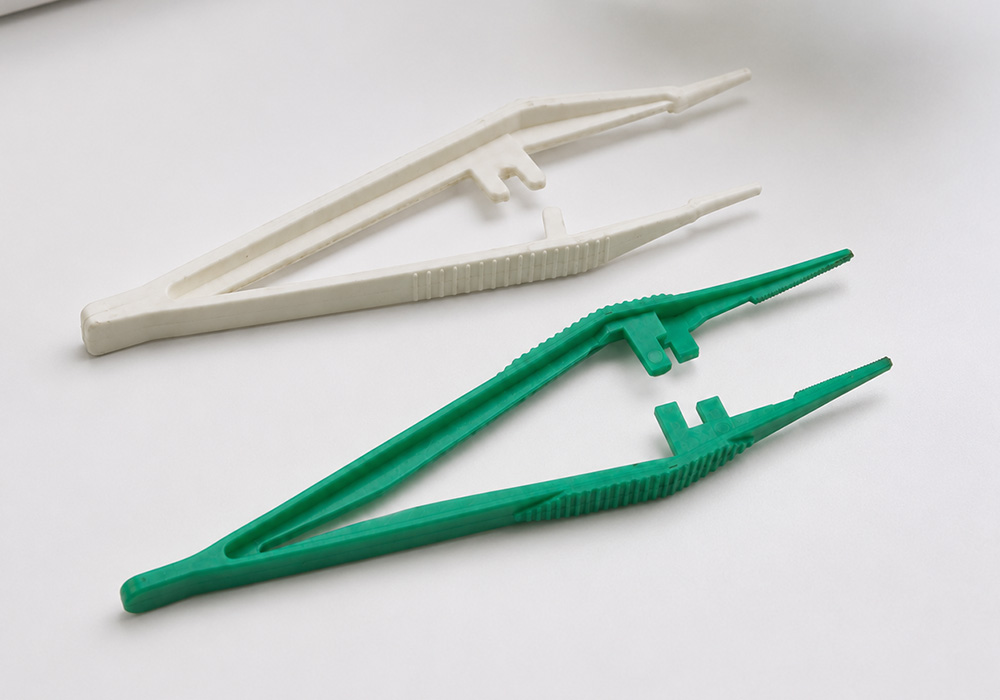
Disposable tweezers are widely used in medical and laboratory settings for tasks such as sample collection, laboratory sampling, wound dressing, aesthetic procedures, and as an aid in oral/dental operations. When sourcing these single-use plastic consumables, procurement professionals often worry about several key risks: the presence of burrs or flash on the tips, which can scratch samples or skin; insufficient toughness in the handle, leading to breakage during use; inconsistent elasticity or “feel” across different batches; poor product cleanliness due to mold debris or residue, failing to meet acceptance standards; and the high costs and long lead times associated with mold development for custom specifications.
Many assume that because disposable tweezers have a simple structure, they can be produced by any standard injection molding facility. In reality, medical-grade disposable tweezers require a level of precision in mold design and fabrication that far exceeds that of ordinary consumer goods.
First, the tips of the tweezers feature thin-walled, sharp-angled geometries. If the mold lacks sufficient machining precision or proper venting, the tips are prone to defects such as short shots (incomplete filling), scorching, stringing, or flash. In a medical context, any loose flash or debris could contaminate a sample, leading to failed test results or significant safety hazards.
Second, the elasticity of the tweezers depends on the uniform thickness of the two gripping arms. If the mold cavity is not machined with precise, consistent thickness, the tweezers may end up stiffer on one side than the other, resulting in unstable gripping force.
Third, many medical consumable orders require production within a controlled, clean environment. Furthermore, clients often request custom specifications—such as specific lengths, tip shapes, or anti-slip textures—all of which necessitate ongoing, precise mold adjustments.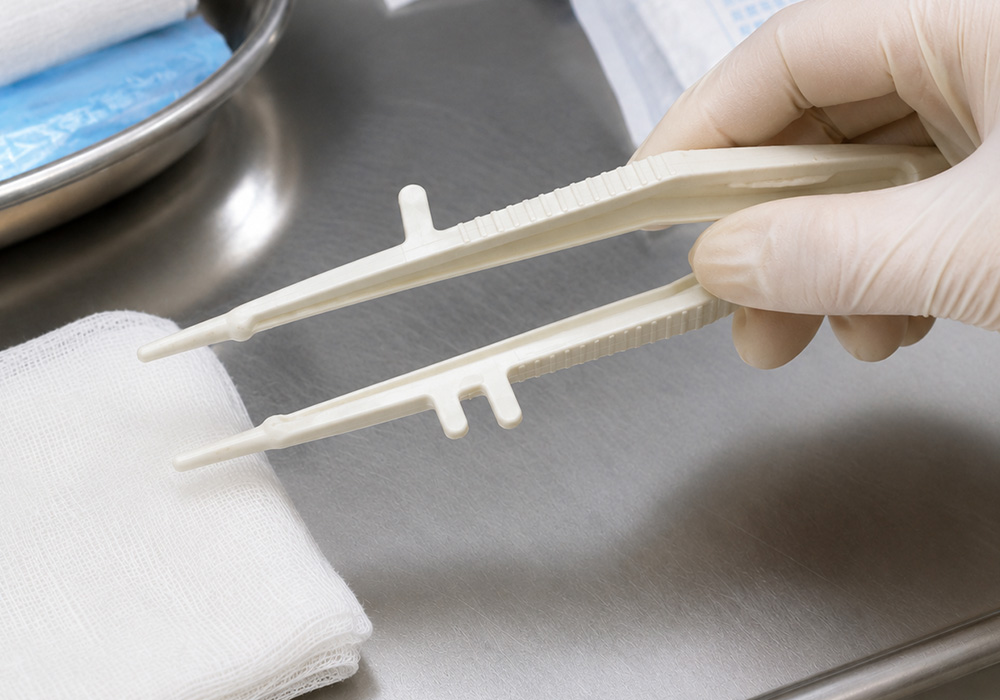
Injection molding facilities that rely on third-party mold makers often struggle to meet these requirements consistently. If a mold insert wears out or a vent becomes clogged, the mold must be sent out for repair; this causes significant downtime, which—given the strict delivery deadlines typical for medical orders—frequently leads to shipping delays.
Hubei Baiteng Plastic Industry & Electronic Technology Co., Ltd. leverages its own comprehensive suite of precision mold-making equipment to provide mature, reliable production solutions for thin-walled medical plastic components, such as **disposable tweezers**. Our mold workshop is equipped with CNC machines, precision electrical discharge machines (EDM), wire-cut EDM, precision grinders, and turning/milling equipment, allowing us to control mold quality right from the source: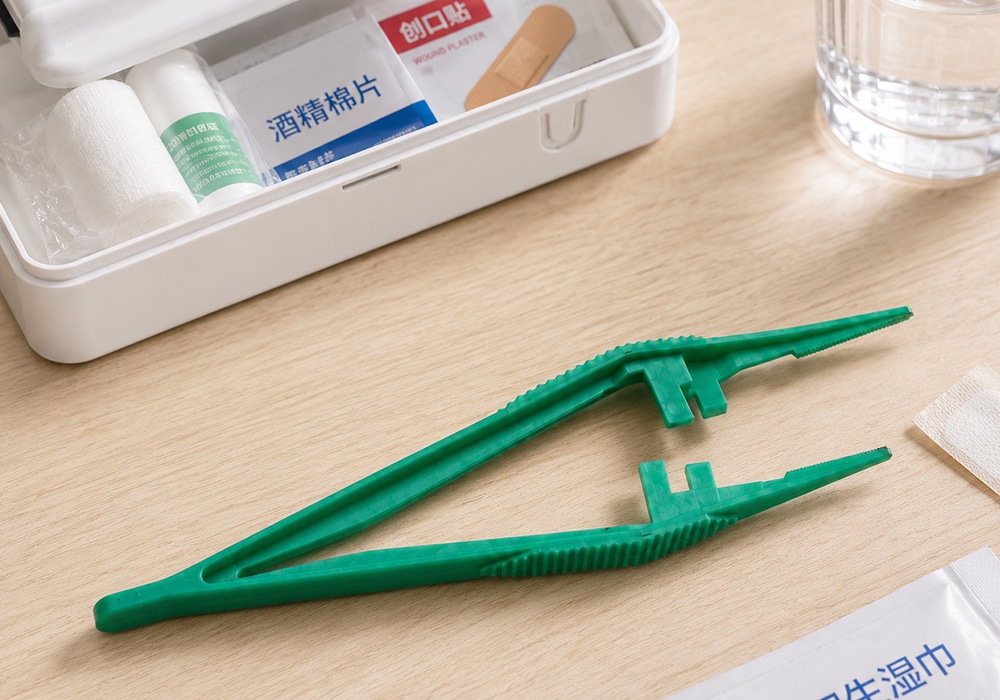
– We use slow-speed wire-cut EDM to machine the fine slots and anti-slip textures on the tips of the tweezers, ensuring crisp patterns and clean edges, which minimizes the formation of burrs at the root.
– Precision surface grinders are used to control the wall thickness of the mold cavities, ensuring consistent thickness across both arms of the tweezers; this guarantees uniform and stable elasticity for every single-use pair.
– Our mold designs feature optimized venting and cooling channels, effectively preventing common issues in thin-walled components—such as scorching, short shots, and high internal stress that could lead to breakage.
– We provide in-house services for rapid mold repair, polishing, and texture modification. This allows for quick adjustments to tweezer length, tip style, or anti-slip features without the need for outsourcing, ensuring a faster turnaround during mold trials.
Our service portfolio covers the entire supply chain: mold manufacturing and maintenance, injection molding, product assembly, and individual packaging. For single-use tweezers, we offer customized packaging options—such as individual pouches or sterile-grade packaging—integrated directly into the post-molding process. This minimizes dust contamination caused by intermediate handling, meeting the stringent cleanliness requirements for medical consumables. Clients simply need to provide drawings or samples, and we handle the rest—from mold development and trial production to injection molding and final packaging—as a complete, one-stop solution.